
A Fireman’s Tale
In the heart of Windsor, on display within the Windsor and Royal Borough Museum, lies a relic of bravery and dedication: a volunteer fireman’s helmet. This helmet, artefact number 329.55.18, once belonged to John Tull, a man whose life was as rich and varied as the town he served.
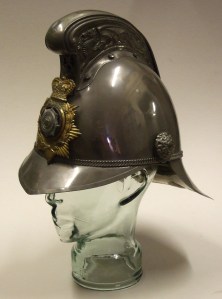
John George Frederick Tull was born on January 30, 1895, in Windsor. He and his twin brother, Joseph “Joe” William Ernest Tull, were destined for lives of service. Their mother, Hannah Tull née Bargeant, and father, John William Tull, instilled in them a sense of duty and community. Tragically, their father passed away in 1900, leaving Hannah to raise the two boys and two sisters alone.
The Tull twins attended Cliftonville College in Margate, a boarding school where they forged their paths. The boys joined the family business, Tull & Sons at 135 Peascod Street (renumbered from 96), and became fourth-generation master bakers (their great-grandfather, John Tull, appears in a 1829 Post Office directory). By February 1915, John had become a fireman probationer and quickly qualified by November of the same year. His dedication to the Windsor Volunteer Fire Brigade was unwavering. In February 1916, he bravely attended a fire at Mr A W Bull’s premises on King’s Road.
John’s life took a turn in January 1917 when as a baker and general manager of the family firm, the second-largest bakery in the area. Despite his civilian responsibilities, John was called to serve in World War I. By 1918, he was a Private in the Royal Army Service Corps. His twin brother Joe also served valiantly in the Berkshire Yeomanry and later in the Machine Gun Corps in France. Joe was also a Windsor fireman.
The Windsor Volunteer Fire Brigade celebrated its 50th anniversary in 1917, a milestone that John was proud to be part of. By 1929, John was Chief Officer and had been made a Member of Honour of the French Fire Brigade Federation, a testament to his dedication and skill. He continued to serve his community, even judging local Fire Brigade competitions during the 1930s.
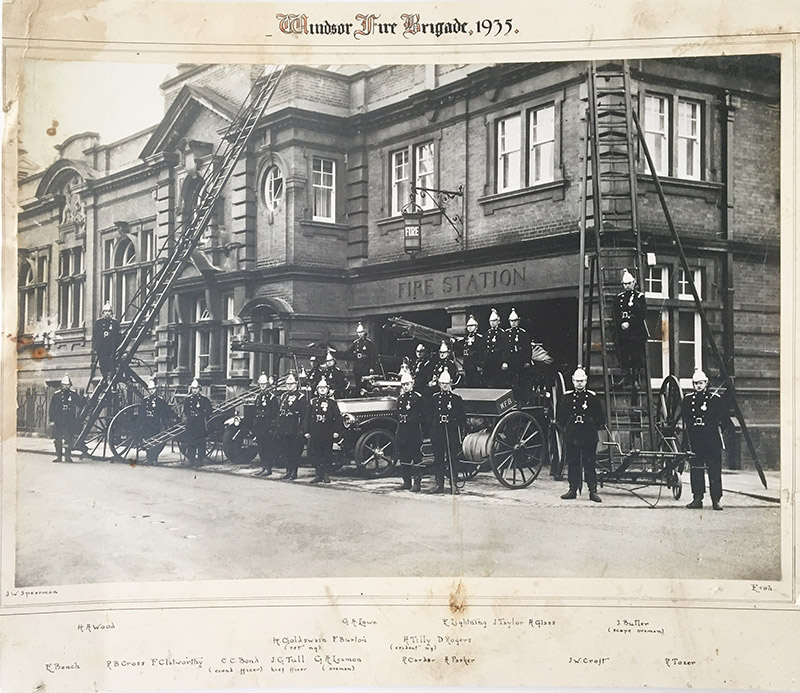
One of John’s more notable fires came in December 1931, when a fire broke out on the first floor of the Star and Garter on Peascod Street. The fire was discovered by a continuously ringing bell due to a short circuit. Champion boxers staying at the establishment, along with several others, formed a water chain to combat the blaze. Under Chief Officer John Tull’s leadership, the fire was confined to the upstairs, though it caused significant damage and took until midnight to extinguish.
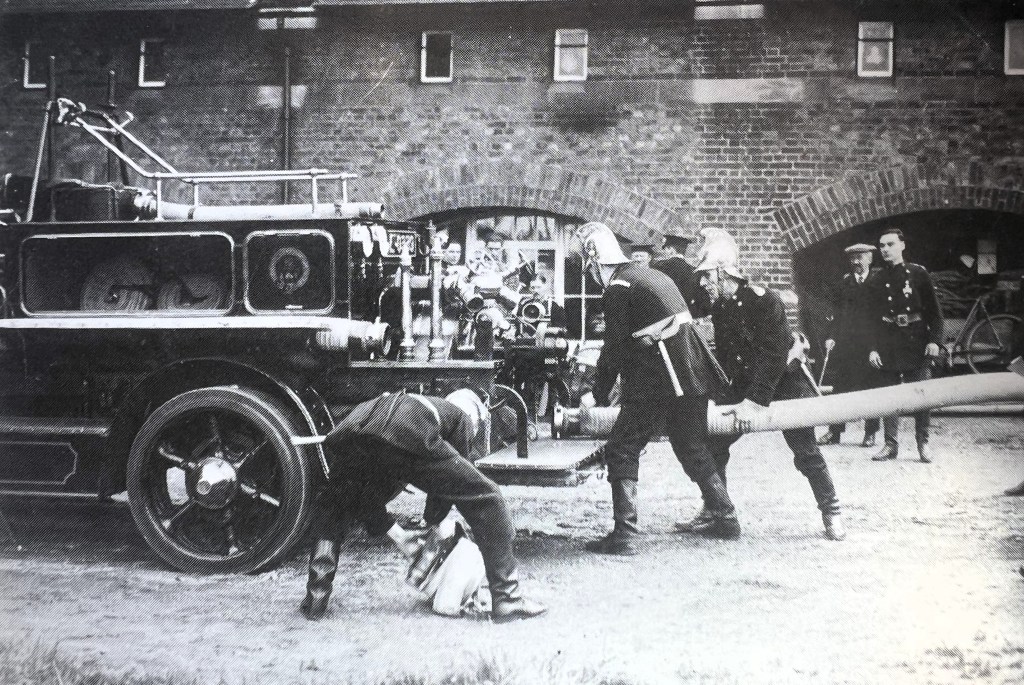
John’s commitment to the Windsor Fire Brigade was unwavering. In January 1940, he was presented with a rose bowl by his colleagues in recognition of his 25 years of service and 10 years as Chief Officer. However, in October 1941, John faced a difficult decision. Offered a reduced position under the National Fire Brigade reorganisation scheme, he chose to resign, a move that sparked protest from the Windsor Town Council and was reported as a “travesty of justice” by one newspaper.
In his later years, John remained a respected member of The Windsor Fire Brigade Old Comrade Association. He continued to manage Tull & Sons, the family bakery, alongside his brother Joseph. There is a story on RWWS that they used to keep a pin of beer and would offer select customers a free pint from a silver tankard. Another story from RWWS is when a loaf of bread was fourpence farthing, Joe threw the farthing in a tin bath; when they retired, two men couldn’t lift it!
The brothers moved to 74 Clarence Road between 1954 and 1956, where John lived until his passing on June 10, 1958, at King Edward VII Hospital. Joe passed in 1963. Neither brother ever married.
John Tull’s legacy is one of bravery, dedication, and unwavering service to his community. His helmet, now a cherished artefact, serves as a reminder of the man who wore it with pride and honour. You can find details on how to sponsor the helmet and support the Museum on our “Sponsor an Object” page.
Thanks
To Roger and the Royal Windsor Website (RWWS) and their discussion forum. Also, their article “Windsor Fire Brigade” which an inspiration for this article.
Additional Information
- 135 Peascod Street was rebuilt in 1866, and is Grade II listed by Historic England.
- When the house/bakery was rebuilt, the bakery business was carried on from “temporary premises nearly opposite” (src: WEE, April 1866).
- Tull & Sons may have been Bakers by Royal Appointment.
- John and Joe’s uncle, Ernest V Tull, and then their cousins, owned E.V. Tull’s the Confectioner (By Special Appointment) at 18 Thames Street, expanding it in 1901 by taking over G. & E. Ivey’s business.
 Friends of Windsor Museum